
No. Ceramic coating does not make vehicle paint scratch-proof.
It also does not make a car stone-chip-proof, prevent every swirl mark or provide permanent protection.
What a properly applied coating can do is add a useful protective layer to prepared paintwork, improve water behaviour, make routine cleaning easier and help maintain the appearance of the finish.
Understanding that difference is important before deciding whether a coating is worthwhile.
What is a ceramic coating actually doing?
A ceramic coating is applied to the prepared exterior surface of a vehicle and forms a bonded protective layer.
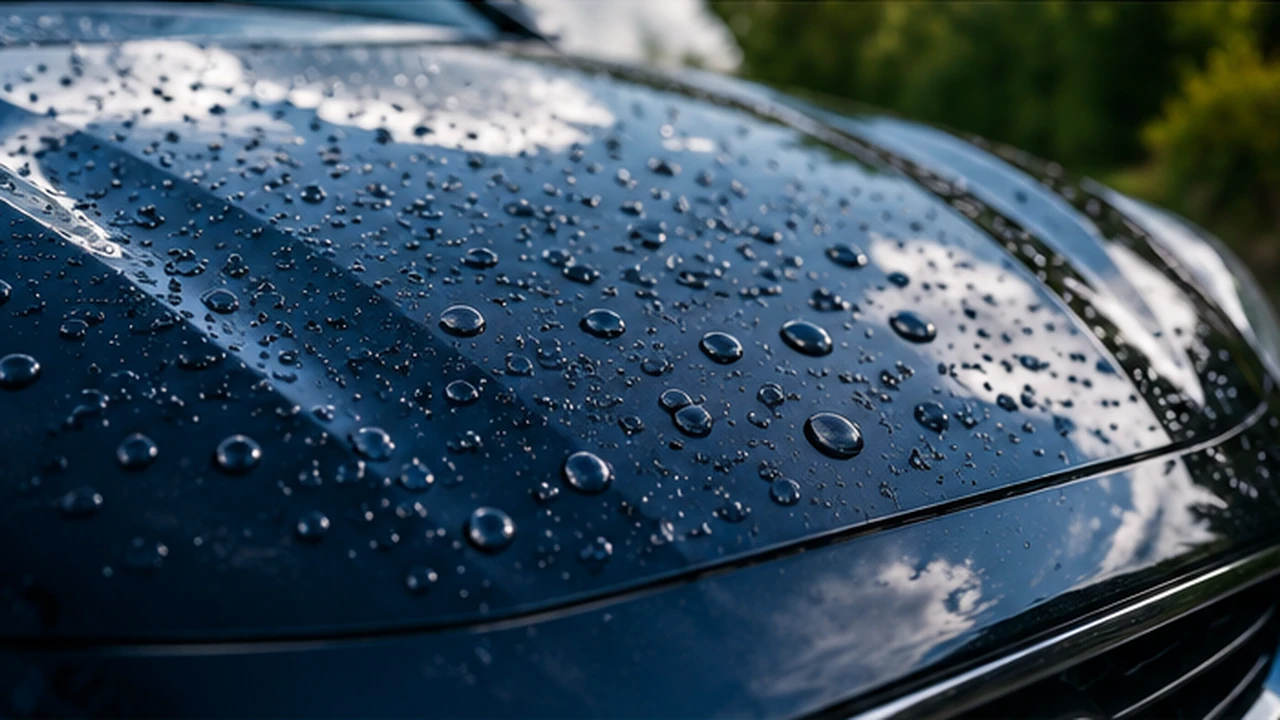
Once correctly applied and cured, the coated surface typically becomes more water-repellent and easier to maintain.
Water tends to bead or move from the surface more readily, while dirt may be less inclined to adhere as stubbornly as it would to unprotected paint.
This can make regular washing more straightforward.
A coating can also enhance the appearance of properly prepared paint, particularly its gloss and clarity.
The important phrase, however, is properly prepared.
Why ceramic coating is not scratch-proof
A ceramic coating is very thin compared with the physical forces involved when something scratches a car.
If a branch is dragged down a panel, a bag buckle hits the paint or grit is rubbed across the surface, the coating cannot create an impenetrable shield.
The same applies to poor washing.
If dirty wash media is repeatedly dragged across coated paint, marks can still develop.
Some light contact may affect the coating rather than the underlying paint, but it is misleading to translate this into a claim that the vehicle is scratch-proof.
Good maintenance still matters after coating.
It will not stop stone chips either
Stone chips are caused by physical impact.
A small piece of road debris travelling at speed can strike the front bumper, bonnet or other exposed area with considerable force.
A ceramic coating is not designed to absorb that type of impact.
It therefore should not be sold as a stone-chip prevention product.
Different forms of protection are intended for different jobs, and ceramic coatings are primarily about surface protection and easier maintenance rather than impact resistance.
What benefits can you realistically expect?
A correctly prepared and coated vehicle can gain several practical benefits.
Easier routine cleaning
The coated surface can make dirt and water easier to deal with during normal maintenance.
It does not mean the car becomes self-cleaning.
You will still need to wash it, particularly during wet winter weather or periods of heavy use.
Strong water behaviour
One of the most visible characteristics of many ceramic coatings is the way water beads or sheets from the surface.
This can make drying easier and gives a clear indication of the surface behaviour created by the coating.
Added protection from environmental contamination
A coating provides an additional barrier between the paint and everyday contamination.
That can be useful against the normal environmental material a car encounters, although contamination should still be removed appropriately rather than deliberately left sitting on the surface.
Improved appearance
On well-prepared paint, a coating can complement the gloss and clarity of the finish.
But it is important not to confuse the appearance created by paint preparation with the coating itself.
If the paint has visible swirl marks beforehand, applying a coating does not magically remove them.
Preparation is a major part of the job
Applying the coating is only one stage.
The vehicle needs to be properly cleaned first, and bonded contamination may need to be removed.
The paint should then be inspected.
If there are visible swirl marks or suitable defects that the owner wants improved, machine polishing may be considered before the coating is applied.
Our Paint Correction & Machine Polishing page explains what polishing can realistically address.
The aim is to avoid sealing in a finish that the owner is already unhappy with.
Does every car need paint correction first?
Not necessarily.
Paint correction should be based on the actual condition of the vehicle rather than automatically carried out simply because a coating is being applied.
A newer or well-maintained car may need relatively little corrective polishing.
An older vehicle with visible swirls, hazing or previous poor washing may benefit from more preparation.
The correct level depends on the paintwork and the result the owner is trying to achieve.
Ceramic coating still needs maintenance
Another common misunderstanding is that once the coating is on, the vehicle no longer needs proper care.
It does.
A coated car still gets dirty. It can still collect road grime, brake dust, bird droppings and contamination.
It can still be scratched through careless washing.
Appropriate cleaning helps preserve the coating’s performance and the appearance of the underlying finish.
Leaving a coated vehicle neglected for long periods defeats much of the point of having it protected in the first place.
How long does ceramic coating last?
There is no sensible universal answer without knowing the exact coating product, preparation, application and how the vehicle is subsequently maintained.
Different products are designed for different levels of durability.
Vehicle use, storage, mileage and washing methods also affect real-world performance.
For that reason, durability claims should relate to the actual coating being applied rather than treating “ceramic coating” as if every product were identical.
You can read more about our approach to preparation and protection on the Ceramic Coatings page.
Is ceramic coating worth considering?
It can be worthwhile if your priorities are easier maintenance, strong water behaviour, added surface protection and preserving a properly prepared finish.
It is less suitable if your expectation is that you will never have to wash the vehicle again or that the paint will become immune to scratches and stone chips.
Knowing those limitations before the work is carried out usually leads to much more realistic expectations.
Need help deciding?
If you are considering coating your vehicle but are unsure how much preparation the paint needs first, contact us. We can assess the condition and explain what preparation would be appropriate before any coating work.