
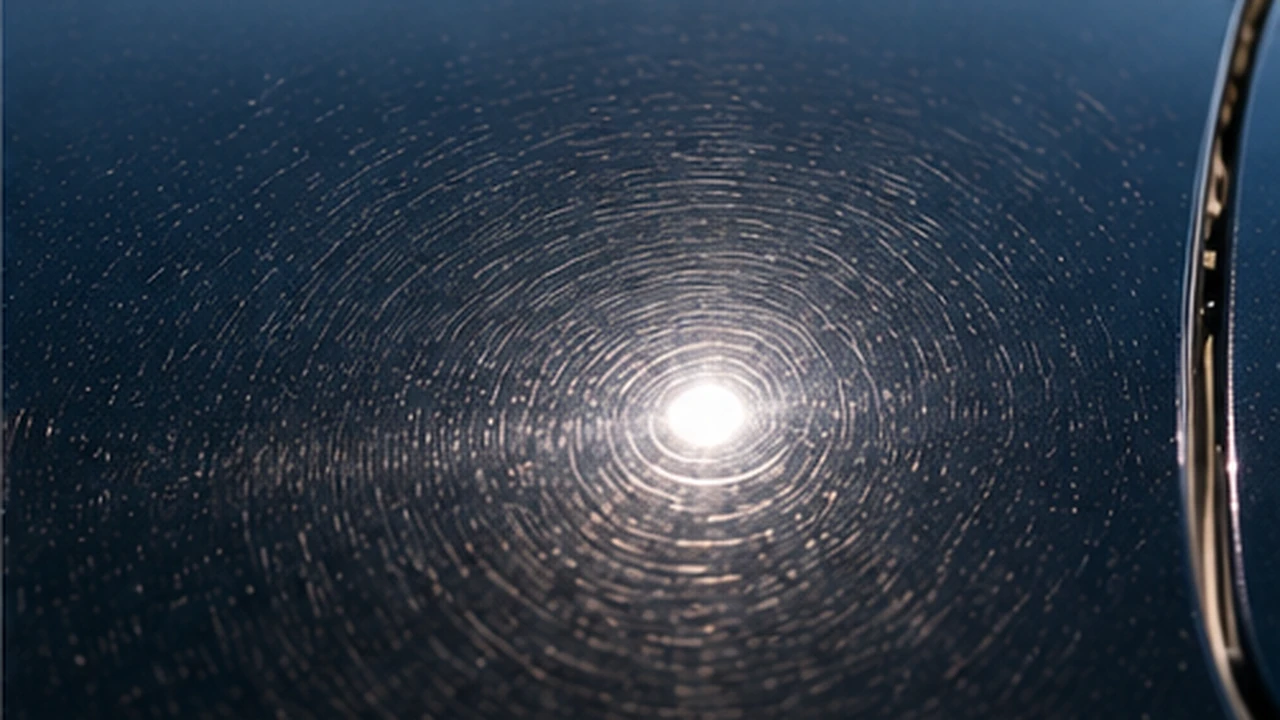
Swirl marks are fine scratches or surface defects in a vehicle’s paint finish. They are often most noticeable on dark colours and under direct sunlight, workshop lighting or a bright inspection lamp.
Despite the name, they are not normally perfectly circular scratches. The circular appearance is largely caused by light reflecting around the point you are looking at.
In many cases, swirl marks develop gradually through washing, drying and everyday contact with the paint.
Washing is one of the most common causes
Dirt sitting on a vehicle contains particles that can mark the paint when they are dragged across it.
If a sponge, wash mitt or cloth picks up dirt and continues to be moved over the vehicle, that contamination can act abrasively against the finish.
The marks may be extremely fine individually, but repeated washing over months or years can create a visibly dull or swirled appearance.
This is why the method used to wash a vehicle matters as much as simply getting it clean.
Dirty wash media increases the risk
Even good-quality wash equipment can cause problems if it is heavily contaminated.
A mitt or cloth that has picked up grit from a particularly dirty lower panel should not simply be rubbed across cleaner areas of the car.
Likewise, repeatedly using dirty water makes it easier for contamination to return to the paint.
No washing process can guarantee that a vehicle will never develop a mark, but reducing unnecessary friction and keeping wash media clean helps minimise avoidable damage.
Automatic car-wash brushes can leave marks
Traditional automatic brush washes can be another source of fine paint defects.
The problem is not simply that a brush touches the car.
It is the combination of repeated physical contact and whatever contamination may be present on the brush, the paint or both.
A vehicle can come out looking cleaner while gradually developing fine marks in the finish.
How noticeable they become depends on the paint, colour, previous condition and frequency of use.
Drying can cause damage too
The vehicle is not safe from swirl marks simply because the washing stage has finished.
Dragging an unsuitable or contaminated drying material across paintwork can also introduce fine scratches.
Problems are more likely if dirt has not been fully removed during washing or if the drying towel itself has picked up contamination.
Gentle drying with clean materials helps reduce the amount of unnecessary contact with the surface.
Wiping dusty paint is particularly risky
One habit worth avoiding is wiping a dry, dusty vehicle with a cloth to make it look cleaner.
Dust may appear harmless, but dragging it directly over the finish can create fine marking.
The same applies when someone notices a small dirty patch and rubs it with a dry cloth or sleeve.
If loose dirt is present, it is generally better to remove it through an appropriate washing process rather than rubbing it across dry paint.
Everyday use contributes as well
Not every paint defect comes from poor washing.
Cars are exposed to constant physical contact and contamination during normal use.
Branches, clothing, bags, fingernails around door handles and people brushing against bodywork can all leave marks.
Older vehicles often have paint defects from many different sources accumulated over several years.
That is why it can be difficult to identify one single cause when inspecting a heavily swirled car.
Contamination can make the problem worse
A paint surface can remain contaminated even after normal washing.
Iron particles, tar and other bonded contamination can attach to the surface and make the paint feel rough.
Trying to polish or heavily rub contaminated paint without dealing with the contamination first is not good preparation.
Where needed, proper paint decontamination can help produce a cleaner surface before further paintwork treatment.
Can swirl marks be removed?
Many lighter swirl marks can be improved through machine polishing, provided the paint condition makes this appropriate.
Polishing works on the paint surface rather than covering dirt or defects with a temporary product.
The amount of correction that is sensible depends on several factors, including:
- the depth of the defects;
- the condition of the paint;
- previous polishing;
- the type of finish;
- how much clear coat is available to work with safely.
Some defects can be greatly improved. Others may remain partly visible.
Deeper scratches, chips or damage through the paint layers cannot simply be polished away.
Our Paint Correction & Machine Polishing page explains the process in more detail.
Prevention is better than repeatedly correcting the paint
Machine polishing can improve suitable paint defects, but it should not be treated as something to perform unnecessarily every time a mark appears.
A better approach is to correct the finish when appropriate and then use sensible maintenance methods afterwards.
That means reducing avoidable contact, keeping wash equipment clean and resisting the temptation to rub dry dirt from the vehicle.
A car in regular use will never remain completely untouched, but careful maintenance can substantially reduce unnecessary marking.
Need help assessing your paintwork?
If swirl marks or other paint defects are bothering you, contact us with some details or photographs. We can help determine whether polishing is likely to be appropriate rather than assuming every defect can be removed.