
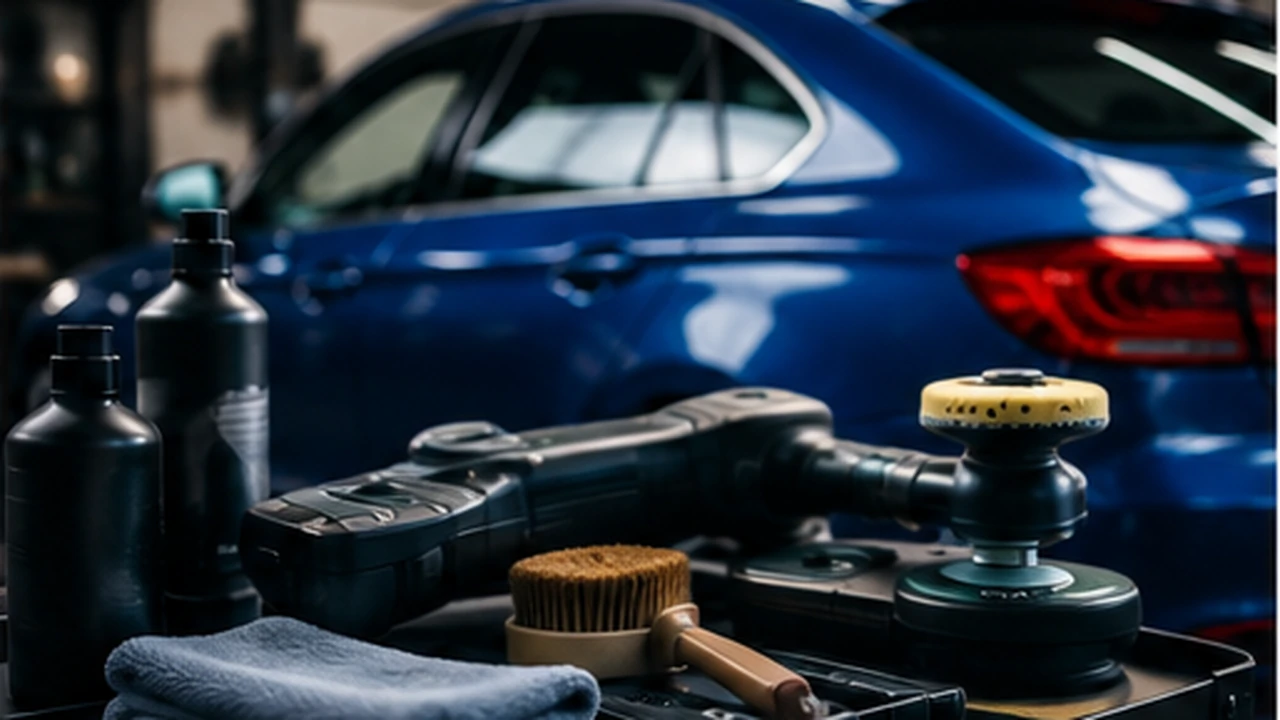
Car valeting generally refers to cleaning and presenting a vehicle, while detailing usually describes more focused work on particular surfaces or defects.
That sounds simple, but there is no legal or universally agreed definition separating the two. Different businesses use the terms differently, and there is plenty of overlap.
It is therefore better to look at what work is actually included than to choose a service purely because it has the word “valet” or “detail” in its name.
What normally counts as car valeting?
A normal car valet is primarily about getting the vehicle clean, tidy and presentable.
Depending on the level of service, that can include exterior washing, wheel cleaning, vacuuming, interior surfaces, windows, tyres, door shuts and various finishing steps.
A more comprehensive valet may go further with additional exterior cleaning, protection or interior attention.
The main point is that valeting normally deals with the vehicle as a whole.
If a car is simply dirty from normal use and needs to be brought back to a clean, well-presented condition, a valet is often the logical place to start.
Our valeting packages follow this approach, with different levels depending on how much work the vehicle requires.
So what is car detailing?
Detailing tends to become more focused.
Instead of simply asking, “How thoroughly should this car be cleaned?”, the question may become, “What needs to be done to this particular surface or problem?”
Examples include:
- improving swirl marks in paintwork;
- removing bonded contamination;
- preparing paint for protection;
- applying a ceramic coating;
- dealing with a heavily soiled interior area;
- restoring neglected exterior trim;
- carefully detailing an engine bay.
These jobs may form part of a wider vehicle preparation, but they can also be carried out as individual services.
That is why the distinction between valeting and detailing is not always neat.
Paint correction is very different from washing
One of the clearest examples is paint correction or machine polishing.
A normal exterior valet is designed to clean the paintwork.
Machine polishing, by contrast, is intended to improve suitable defects in the paint surface such as light swirl marks, hazing or certain scratches.
The paint should first be properly cleaned and assessed. The polishing stage then works on the condition of the finish rather than simply removing dirt from it.
Deeper scratches, stone chips and defects that extend beyond a safely correctable area cannot simply be polished away.
That type of work is therefore fundamentally different from a routine wash, even though both ultimately improve how the vehicle looks.
Decontamination goes beyond visible dirt
Paint can also feel rough or contaminated even after it has been washed.
This may be caused by bonded contamination that normal washing does not remove.
Specialist decontamination methods can target substances such as iron contamination, tar and other material attached to the paint surface.
Again, that is different from simply washing away loose dirt.
It may be worthwhile before polishing or applying longer-term paint protection because those processes work best on properly prepared surfaces.
Interior detailing can also become more specialised
The same principle applies inside the vehicle.
Routine vacuuming and cleaning of interior surfaces falls naturally within valeting.
More heavily soiled fabrics, leather, carpets or difficult contamination may need additional attention that goes beyond a normal maintenance clean.
It is the condition of the interior, rather than the label attached to the service, that should determine what work is required.
Ceramic coatings need proper preparation
Ceramic coating is another good example of why “detailing” usually means more than giving a car an especially thorough wash.
A coating is applied to prepared paintwork.
If contamination, staining or paint defects are present beforehand, simply applying a coating over them does not correct those problems.
Preparation can therefore form a substantial part of the job.
The coating itself provides useful surface protection and can make ongoing cleaning easier, but the quality of the preparation underneath it matters greatly.
What about engine bay detailing?
An engine bay is another area where specialist work differs from ordinary cleaning.
It contains electrical components, connectors, intake areas and other parts that should be treated appropriately.
A careful engine bay detail is therefore not simply a matter of directing a pressure washer under the bonnet.
The method and amount of cleaning should reflect the condition and layout of the particular vehicle.
Which one does your car need?
If your vehicle mainly needs to be washed, vacuumed and brought back to a clean standard, start by looking at a valet.
If there is a particular problem you want to address — paint defects, contamination, protection, heavy interior soiling or another specific area — specialist detailing may be more appropriate.
Sometimes the best solution is a combination of the two.
For example, a vehicle could receive a general valet with one particular specialist treatment added where it is genuinely needed.
You can see the range of more focused work on our Specialist Services page.
The service description matters more than the name
“Valeting” does not automatically mean basic and “detailing” does not automatically mean better.
A well-chosen routine valet can be exactly what a clean, regularly maintained vehicle needs.
Likewise, there is little value in paying for specialist work that does not address an actual problem.
Look at what is included, what result the work is intended to achieve and whether it matches the present condition of your car.
Need help choosing?
If you are unsure whether your vehicle needs a normal valet or more specialist attention, get in touch and tell us what you would like improved. We can help identify the most sensible starting point.